
Tax mistakes can cost your business thousands of dollars in penalties and interest. Most companies don’t realize they’re at risk until the IRS comes knocking.
At Bette Hochberger, CPA, CGMA, we’ve seen how proper tax risk management transforms a company’s financial security. This guide shows you exactly what risks to watch for and how to protect yourself.
Common Tax Risks Businesses Face
Worker Misclassification Costs Add Up Fast
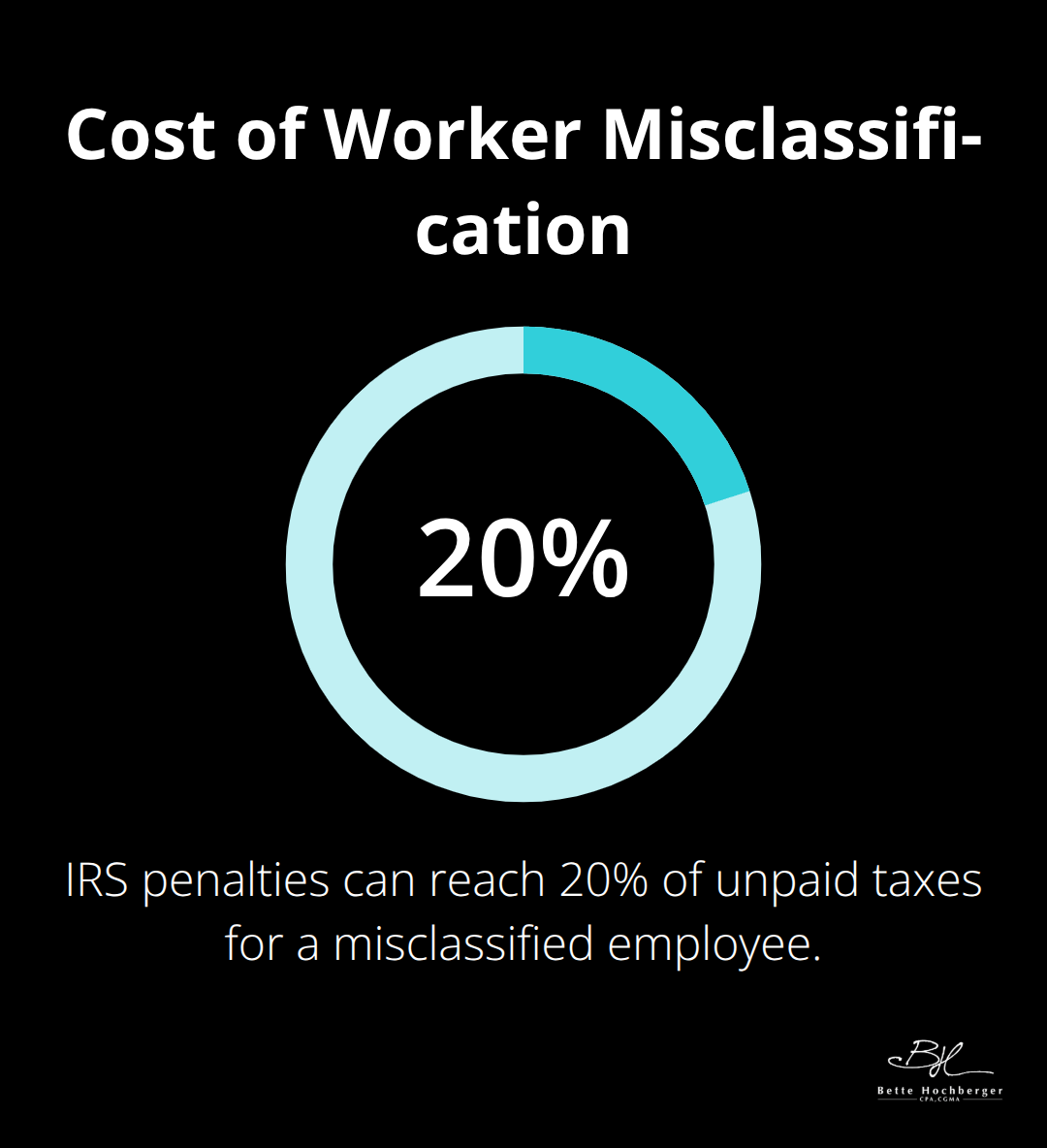
Worker misclassification ranks among the most expensive mistakes we see businesses make. Many companies classify independent contractors incorrectly to reduce payroll taxes, but the IRS applies a strict test based on control, financial relationship, and how integral the worker is to operations. One misclassified employee triggers back taxes, penalties up to 20 percent of unpaid taxes, and interest charges that compound monthly.
You need to conduct a worker classification audit annually, review each position against IRS guidelines, and document your classification reasoning in writing.
Expense Misclassification and Documentation Gaps
Expense misclassification creates similar exposure when businesses categorize personal expenses as business deductions or claim depreciation on items that don’t qualify. Inadequate documentation amplifies this risk dramatically. The IRS requires contemporaneous written records for most business expenses, and without receipts, invoices, or transaction details, you must prove legitimacy entirely on your own. Companies that maintain digital records using accounting software experience fewer audit adjustments than those relying on paper files or spreadsheets. Implementing robust documentation systems protects you during audits and strengthens your overall tax position.
Regulatory Changes Create Compliance Traps
Non-compliance with changing tax regulations happens because tax laws shift constantly, and ignorance doesn’t protect you from penalties. State tax obligations, sales tax nexus rules, and employment tax thresholds change annually. Without a system for tracking regulatory updates relevant to your industry, you’ll miss filing deadlines or fail to implement required changes. Establishing a quarterly tax review process with your advisor specifically designed to flag regulatory changes affecting your operations and adjust your systems accordingly protects you from these gaps.
How to Build a Tax Risk Management System That Actually Works
Quarterly Reviews Create Accountability and Documentation
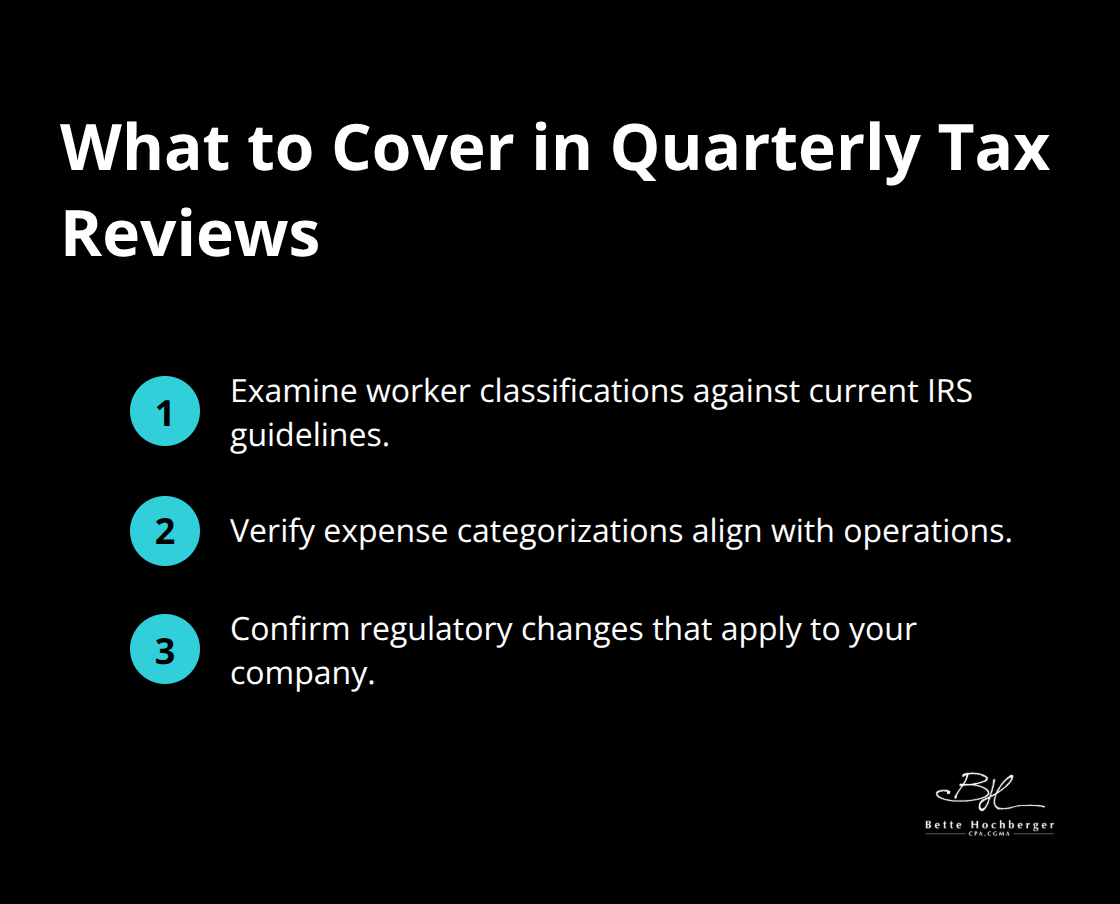
Waiting for an audit to expose tax problems costs far more than preventing them upfront. A systematic approach to tax risk management catches issues before penalties accumulate. The foundation starts with quarterly tax reviews conducted with your accountant or tax advisor, not annual meetings. During these reviews, you’ll examine your worker classifications against current IRS guidelines, verify that expense categorizations match your business operations, and confirm that recent regulatory changes apply to your company. Many business owners skip this step because they assume their accountant handles everything, but quarterly reviews force accountability and create documented evidence of your good-faith compliance efforts.
This documentation matters significantly during IRS disputes because it demonstrates intentional risk management rather than careless mistakes.
Assign Ownership for Tax Law Monitoring
Establish a system where one person owns responsibility for tracking tax law changes relevant to your industry. This could be your CFO, bookkeeper, or an external advisor, but someone must monitor federal and state tax updates monthly and flag changes affecting payroll, sales tax, or deductions specific to your operations. Without this accountability structure, regulatory updates slip through unnoticed and create compliance gaps that auditors exploit.
Implement Cloud-Based Documentation Systems
Your documentation systems determine whether an audit becomes manageable or catastrophic. Cloud-based accounting software like QuickBooks Online or Xero timestamps transactions automatically and creates an audit trail showing who entered data and when changes occurred. The IRS views digital records with timestamps far more favorably than reconstructed spreadsheets or paper receipts found after the fact. For each business expense, your system must capture the receipt, the business purpose, the date, the amount, and how it was categorized within 30 days of the transaction.
Specialized Documentation for High-Risk Deductions
Real estate investors particularly need robust documentation for property-related expenses because the IRS scrutinizes real estate deductions heavily. Store receipts digitally using tools like Expensify or Wave, which automatically extract key information and categorize expenses. This approach reduces your bookkeeper’s data entry errors and creates a searchable database when auditors request specific expense details. Without this infrastructure, you’ll waste thousands of hours reconstructing records or pay penalties for missing documentation you can’t produce.
The systems you build now determine your vulnerability during an audit. Once your documentation and monitoring processes operate smoothly, you’re ready to explore the specific tools and professional resources that strengthen your tax position even further.
Tools and Professional Support That Strengthen Your Tax Position
Reactive Advisors Cost You Thousands in Missed Opportunities
Your documentation systems only work when someone with tax expertise reviews them regularly and interprets what the IRS actually cares about. Tax advisory relationships fall into two categories: reactive advisors who file your return after the year ends, and proactive advisors who shape your strategy throughout the year. The difference between these approaches costs thousands of dollars annually. Reactive advisors respond to what already happened.
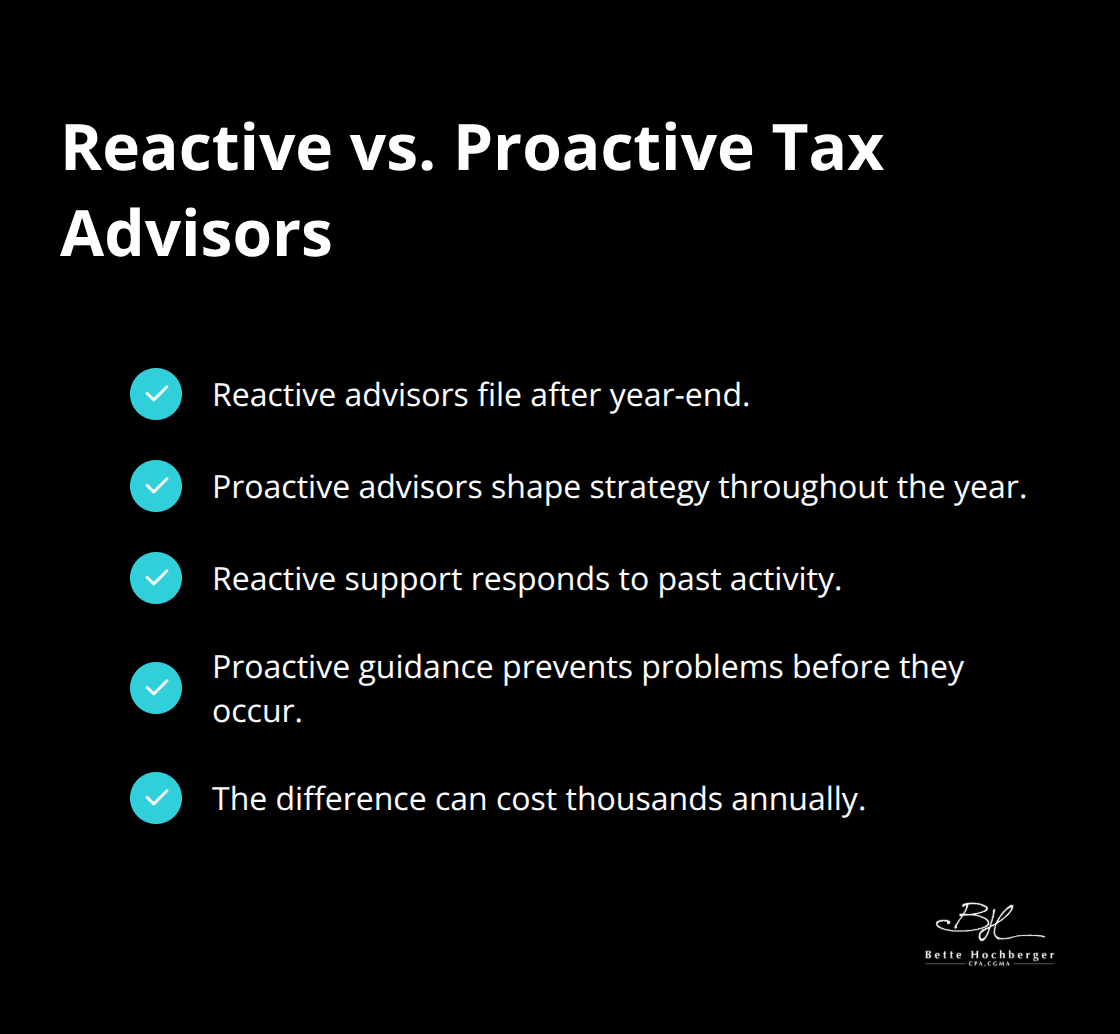
Proactive advisors prevent problems before they occur.
Quarterly Tax Strategy Meetings Deliver Real Protection
Quarterly tax strategy meetings examine your actual business operations, identify emerging risks specific to your industry, and recommend adjustments before year-end. This timing matters because tax decisions made in September often save far more than decisions made in December when your income is already locked in. During these meetings, your advisor reviews your worker classifications against current IRS guidelines, analyzes your deduction patterns for red flags that trigger audits, and assesses whether recent regulatory changes affect your filing obligations.
Many businesses spend $500 to $2,000 annually on quarterly tax reviews but save $10,000 to $50,000 by catching issues early and implementing legitimate tax strategies rather than facing penalties later. Your advisor works with clean, organized data that your documentation systems have already prepared, making these meetings efficient and focused on strategy rather than data reconstruction.
Tax Planning Software Automates Continuous Monitoring
Tax planning software supplements professional guidance by automating routine monitoring tasks between advisor meetings. Cloud-based platforms track regulatory changes and flag updates relevant to your specific business structure and industry, eliminating the manual work of scanning government websites. For real estate investors, specialized software integrates expense tracking with depreciation calculations and identifies deductions you might otherwise miss.
However, software cannot replace judgment. A platform might flag that your state changed sales tax nexus rules, but only a tax advisor understands how that change affects your specific operations and whether you owe back taxes. The most effective approach combines quarterly professional review with software that handles continuous monitoring between meetings.
The Cost-Effective Alternative to Full-Time Tax Staff
This combination costs less than hiring a full-time tax manager but delivers similar protection. Your advisor works with organized data that software has already categorized and prepared for analysis. You gain expert judgment without the overhead of permanent payroll, benefits, and training costs that full-time employees require. Real estate investors particularly benefit from this model because property operations generate complex deductions and depreciation calculations that software can organize but advisors must interpret.
Final Thoughts
Tax risk management requires continuous attention, not annual checkups. The businesses that avoid costly penalties operate with systems that catch problems before auditors arrive, and your exposure to worker misclassification, expense documentation gaps, and regulatory changes shrinks dramatically when you implement quarterly reviews, assign ownership for tax law monitoring, and maintain organized digital records. Spending $500 to $2,000 annually on quarterly tax strategy meetings prevents penalties that easily reach $10,000 to $50,000, and you gain peace of mind knowing that someone with tax expertise reviews your operations regularly.
Your next step depends on where you stand today. If you’re currently filing taxes annually without professional guidance between returns, schedule a consultation to discuss quarterly tax strategy meetings. If you have an accountant but haven’t reviewed your worker classifications or documentation systems recently, request a focused audit of these high-risk areas (this catches most compliance gaps quickly).
Bette Hochberger, CPA, CGMA specializes in exactly this type of proactive tax planning and strategic guidance. Our team works with businesses to build documentation systems, conduct quarterly reviews, and implement tax strategies that minimize your liabilities while keeping your operations compliant. Whether you need fractional CFO services, tax preparation, or strategic tax planning, we’re equipped to help you protect your tax position and grow your wealth.