
At Bette Hochberger, CPA, CGMA, we’ve seen firsthand how outsourced accounting can transform businesses. This powerful strategy allows companies to focus on their core competencies while leaving financial management to experts.
Outsourced accounting services offer more than just bookkeeping; they provide valuable insights that drive growth and profitability. In this post, we’ll explore how leveraging these services can propel your business forward.
What Is Outsourced Accounting?
The Essence of Outsourced Accounting
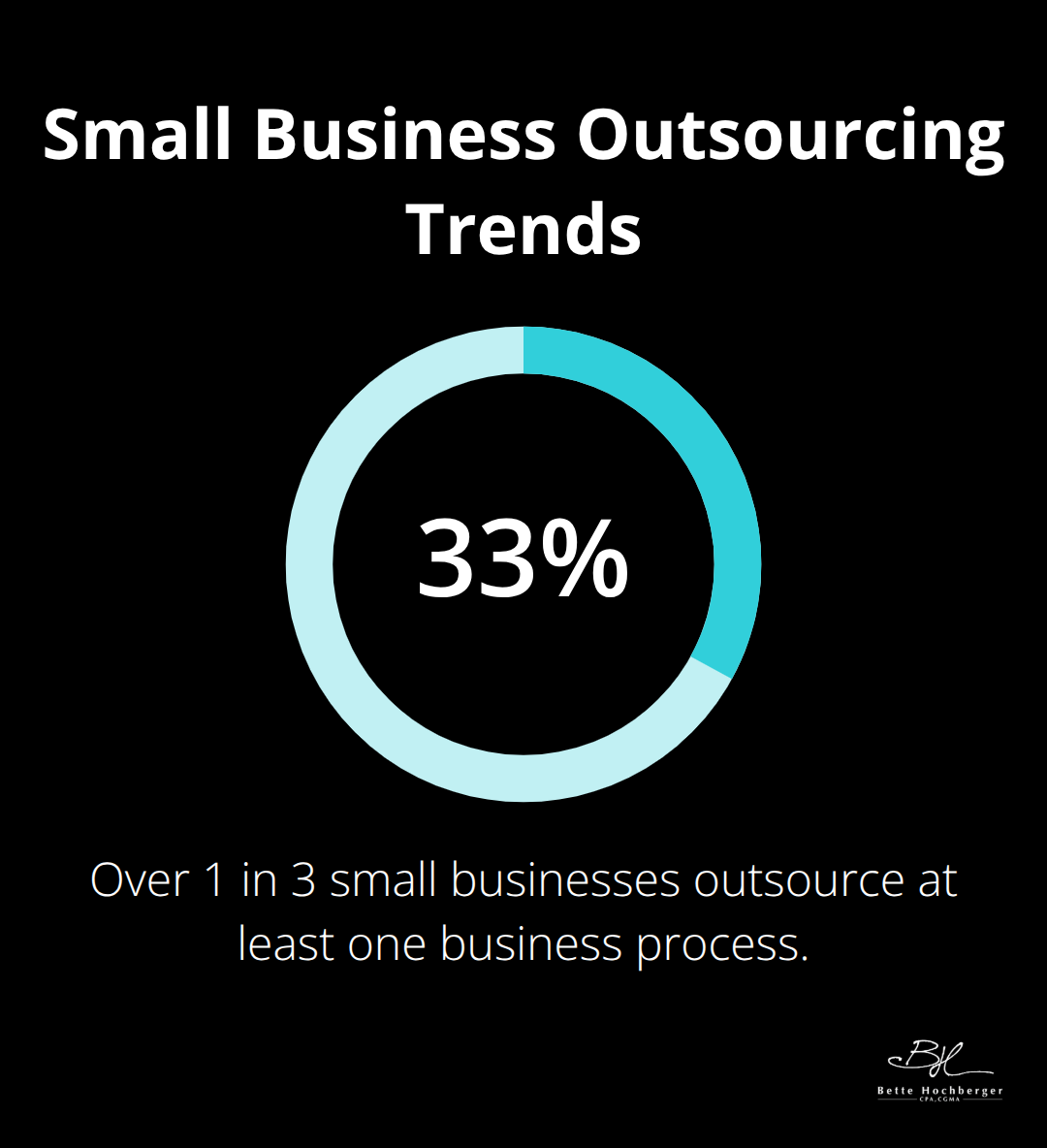
Outsourced accounting ensures consistency and accuracy of bookkeeping and accounting. Plus, you can tap into specialized expertise usually not available in-house. This practice has gained significant popularity, with over 1 in 3 small businesses outsourcing at least one business process, with accounting and IT services being the most popular outsourced functions.
Comprehensive Scope of Services
Outsourced accounting extends far beyond basic bookkeeping. It encompasses a wide range of financial services tailored to meet the unique needs of each business. These services typically include:
- Financial statement preparation
- Tax planning and compliance
- Payroll processing
- High-level financial analysis and strategy
Businesses that leverage outsourced accounting often experience improved financial efficiency and accuracy. This improvement stems from the specialized knowledge and advanced technology that professional accounting firms bring to the table.
Key Offerings from Outsourced Accounting Firms
Outsourced accounting firms provide a comprehensive suite of services designed to support businesses at every growth stage. Some of the most sought-after services include:
- Bookkeeping and financial record maintenance
- Accounts payable and receivable management
- Financial statement preparation and analysis
- Tax planning and compliance
- Payroll processing and reporting
- Cash flow forecasting and management
- Budgeting and financial projections
- Audit support and preparation
These services are often customizable, allowing businesses to select the level of support they need based on their specific requirements and growth stage.
In-House vs. Outsourced Accounting: A Comparison
While some businesses maintain in-house accounting departments, outsourcing offers several distinct advantages. One of the most significant benefits is cost savings. The average annual salaries for accounting roles in the U.S. range from $40,000 for a full charge bookkeeper to $105,000 for a controller. When you factor in employee benefits (which average around $13,000 per employee per year), the costs of maintaining an in-house team can be substantial.
In contrast, outsourced accounting services can range from $30,000 to $60,000 annually for a full stack accounting team, offering significant savings while providing access to a broader range of expertise.
Another key difference lies in scalability. Outsourced accounting allows businesses to easily adjust their financial support based on current needs without the burden of hiring or laying off staff. This flexibility proves particularly valuable for growing businesses or those experiencing seasonal fluctuations.
Outsourced accounting firms often employ advanced technology and standardized processes that can enhance efficiency and accuracy in financial reporting. This level of sophistication may be cost-prohibitive for many businesses to implement in-house.
As we move forward, it’s important to understand how these outsourced accounting services can directly impact business growth and success.
How Outsourced Accounting Fuels Business Growth
Maximizing Financial Efficiency
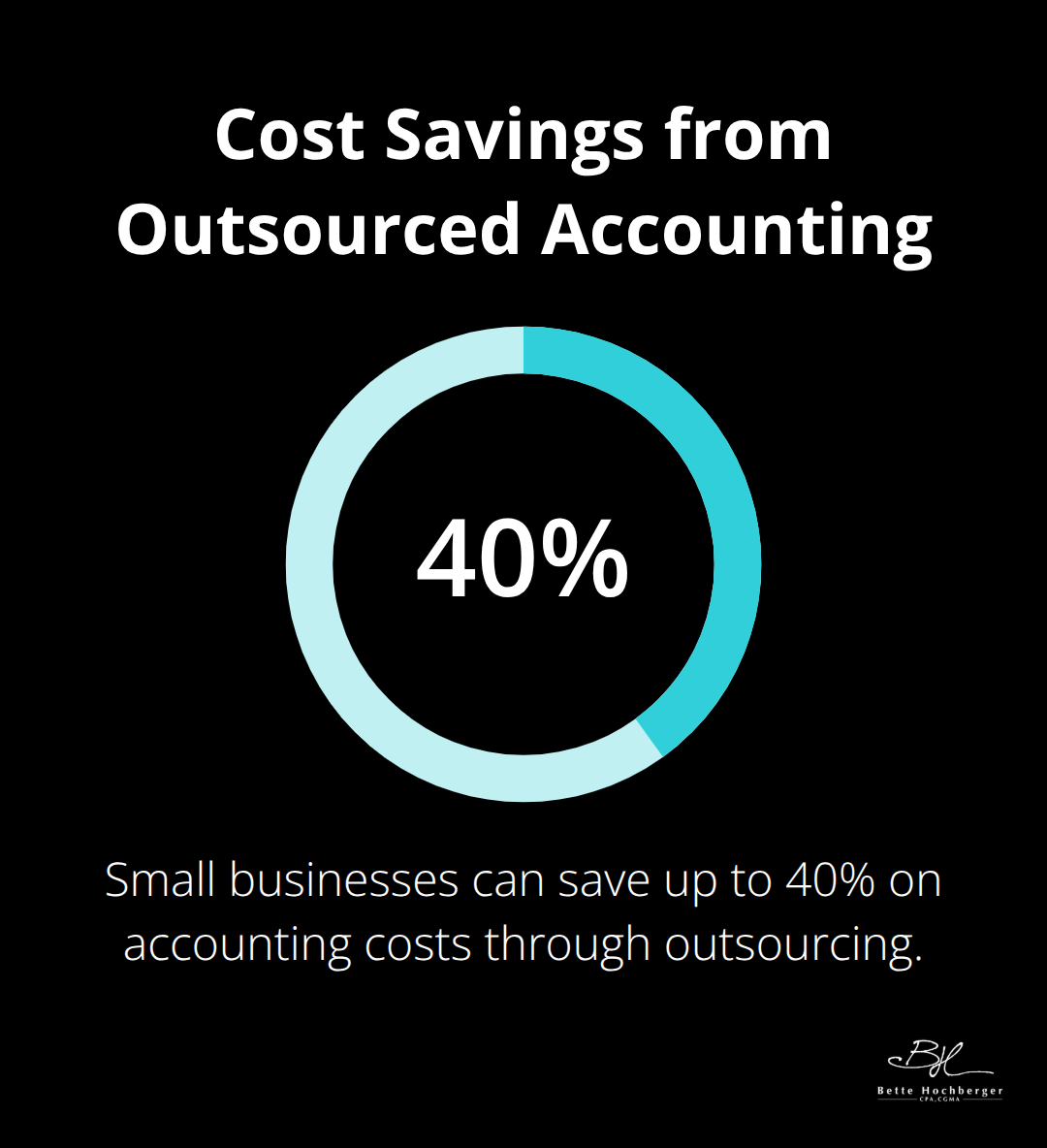
Outsourced accounting transforms financial operations and drives success. It significantly reduces operational costs. Deloitte surveyed more than 500 business and technology leaders, including more than 150 C-suite executives, from across a variety of industries worldwide. Small businesses can save up to 40% on accounting costs through outsourcing, which frees up capital for core business investments.
These savings come from eliminating full-time salaries, benefits, and office space for in-house accountants. Outsourced teams often use advanced software that would be costly for individual businesses to purchase and maintain.
Tapping into Expert Knowledge
Outsourced accounting firms provide a wealth of expertise. They stay current with the latest tax laws, accounting standards, and financial best practices. This knowledge proves essential for compliance and strategic financial planning.
During the COVID-19 pandemic, businesses with outsourced accounting partners navigated complex government aid programs more effectively. They received timely advice on eligibility and application processes for initiatives like the Paycheck Protection Program.
Scaling Operations with Ease
The scalability of outsourced accounting stands out as one of its most significant advantages. As your business grows, you can adjust your accounting needs without the hassle of hiring and training new staff. This flexibility proves particularly valuable for seasonal businesses or those experiencing rapid growth.
For example, a real estate company handled a 300% increase in transaction volume during a market boom without hiring additional in-house staff. Their outsourced accounting team scaled up operations seamlessly to meet the increased demand.
Sharpening Focus on Core Competencies
Outsourcing accounting frees up valuable time and resources for businesses to focus on what they do best. A Clutch survey found that 83% of small businesses will maintain or increase spending on outsourced business services in 2023.
Companies use this freed-up time to develop new products, improve customer service, or expand into new markets. One tech startup accelerated their product development cycle by 30% after outsourcing their financial operations, which led to a faster time-to-market for their innovative software solution.
Enhancing Decision-Making with Real-Time Insights
Outsourced accounting provides businesses with real-time financial insights (often through cloud-based platforms). This access to up-to-date financial data empowers business owners to make informed decisions quickly. Companies can spot trends, identify potential issues, and capitalize on opportunities faster than ever before.
The power of outsourced accounting extends far beyond number-crunching. It serves as a strategic tool to propel businesses forward. The next section will explore how to implement outsourced accounting successfully in your business, ensuring you maximize its potential for growth and invest in success.
How to Implement Outsourced Accounting
Evaluate Your Current Financial Processes
Start with a thorough assessment of your existing financial operations. Identify inefficiencies and areas where you lack expertise. This evaluation will help you determine which accounting functions to outsource. If your business struggles with timely financial reporting, you should prioritize outsourcing this task.
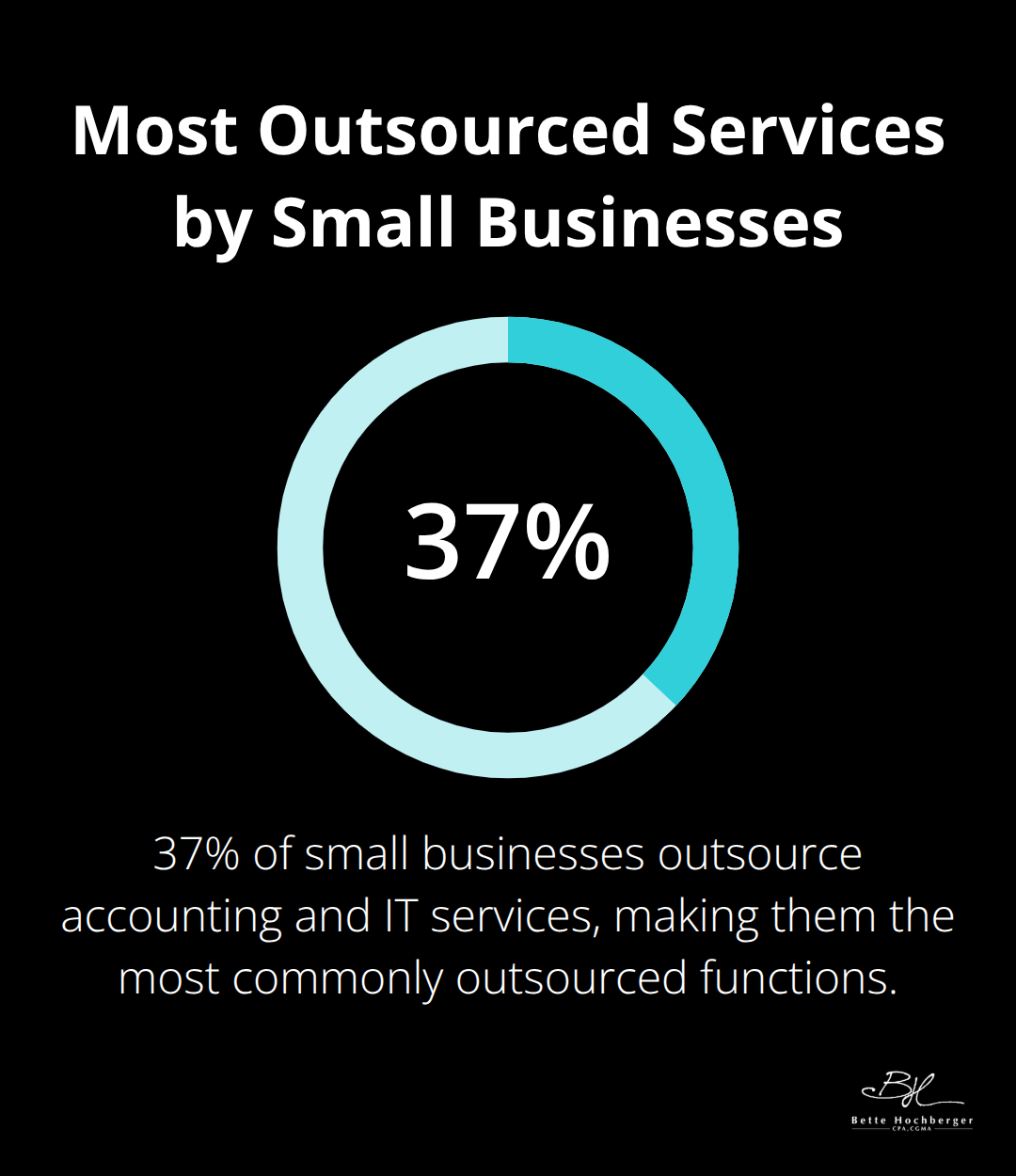
Outsourced accounting is common for small businesses, with accounting and IT services being the most outsourced at 37%. Consider which tasks consume most of your time and whether outsourcing them would benefit your business.
Select a Compatible Accounting Partner
Choosing the right outsourced accounting firm is essential. Look for a partner with experience in your industry and a track record of helping businesses similar to yours. When vetting potential partners, ask about their technology stack, security measures, and communication protocols.
Ensure your chosen firm uses up-to-date accounting software compatible with your systems.
Set Clear Expectations and KPIs
Establish clear expectations and key performance indicators (KPIs) from the outset. These might include reporting deadlines, response times, or specific financial metrics you want to improve. You could set a goal to reduce accounts receivable days by 20% within six months.
Document these expectations in a service level agreement (SLA). This agreement should outline the scope of services, deliverables, and performance standards. Regular reviews of these KPIs will help you spot difficulties early and take corrective action.
Integrate Outsourced Accounting with Your Business
Successful integration of outsourced accounting requires buy-in from your team. Communicate the benefits of this change to your staff and address any concerns they might have. Assign a point person within your organization to liaise with the outsourced team.
Implement a phased approach to integration. Start with non-critical tasks and gradually increase the scope as you build trust and establish workflows. This approach allows for smoother transitions and minimizes disruptions to your operations.
Regular communication and collaboration with your accounting partner are essential for success. Schedule periodic reviews to discuss your financial position, address any issues, and align on strategic financial decisions.
Final Thoughts
Outsourced accounting has become a powerful tool for business growth and success. Companies can streamline financial operations and focus on core competencies by leveraging expert knowledge and advanced technology. The impact extends beyond cost savings, offering real-time insights that enhance decision-making and strategic planning.
The future of outsourced accounting services will likely involve increased integration of artificial intelligence and cloud-based platforms. These advancements will continue to make outsourced accounting an attractive option for businesses of all sizes. Successful implementation requires careful assessment of needs, choosing the right partner, and establishing clear communication channels.
Bette Hochberger, CPA, CGMA specializes in providing personalized financial services that help businesses minimize tax liabilities, manage cash flow, and ensure profitability. Our team offers strategic tax planning, Fractional CFO services, and comprehensive outsourced accounting to support your business growth with our expertise (and advanced cloud technology).